Chain-Link Fence Installation in Torrington, CT
Galvanized and vinyl-coated chain-link fencing — practical, durable, and built to handle Northwest Connecticut winters, snow loads, and frost-heave cycles.
Get a Free Estimate (860) 606-3757Chain-Link Fence in Torrington, CT
Chain-link is the most cost-effective perimeter fence on the market and still earns its keep across Torrington and the wider Northwest Connecticut. It encloses backyards and dog runs, secures contractor yards and storage, surrounds ballfields and municipal facilities, and runs the perimeter on small ag properties without breaking budgets that wouldn't stretch to wood or vinyl. Torrington Fence Builders installs galvanized and vinyl-coated chain-link in residential, commercial, and industrial heights across Torrington and Litchfield County — built with proper post depths, concrete footings below the Connecticut frost line, and the right gauge and mesh size for the application.
Galvanized vs. Vinyl-Coated for Litchfield County
Standard galvanized chain-link is the most affordable option and the right call for utility applications: contractor yards, dog runs, storage perimeters, kennels, and back-corner ag fence. The hot-dip galvanized coating handles Connecticut weather for decades — the salt and runoff from winter road treatment is harder on the chain-link than the frost itself. Vinyl-coated chain-link adds a fused PVC layer over the galvanized core, available in black, green, and brown. Black is by far the most popular finish around residential properties in Torrington and Litchfield because it visually disappears against trees and stone walls — you get the security and dog containment of chain-link without the industrial look. Vinyl-coated is also less prone to picking up corrosion from road salt along driveways and roadside fence lines.


Free Chain-Link Estimate
Limited Slots Available This Month!
Heights, Mesh, and Gauge
Residential chain-link in Torrington is most commonly installed at 4 feet for dog runs and back-corner perimeter, 5 to 6 feet where homeowners want a higher visual barrier, and 4 feet for front-yard applications where local zoning allows. We use 11-gauge or 11.5-gauge wire for typical residential work — heavier wire for high-traffic or large-dog applications. Commercial and security fence runs 7 to 10 feet, often with 9-gauge wire and 2-inch mesh, sometimes with three-strand barbed top guard or razor ribbon depending on the site. Top rails are standard on residential work; commercial installs frequently use top, middle, and bottom tension wire instead. We size posts, gauge, mesh, and tensioning to the actual job rather than running one specification across every project.
Why Frost-Depth Footings Matter
Chain-link's biggest installation failure mode in Northwest Connecticut isn't the fabric or the rail — it's posts that weren't set deep enough to clear frost. Connecticut's frost line runs 42 inches across most of Litchfield County and deeper at higher elevations. A line post set 24 inches deep will heave 2 to 4 inches every spring, and within three years the entire run is wavy, the top rail is buckled, and the gates won't latch. Our chain-link line posts go a minimum of 36 to 42 inches deep in concrete footings, with deeper footings on terminal posts, gate posts, and corner posts where tension loads concentrate. Terminal and gate posts get larger-diameter pipe with reinforced footings sized to the gate's swing weight. These details look invisible on day one and are the entire reason the fence is still tight and plumb in year fifteen.
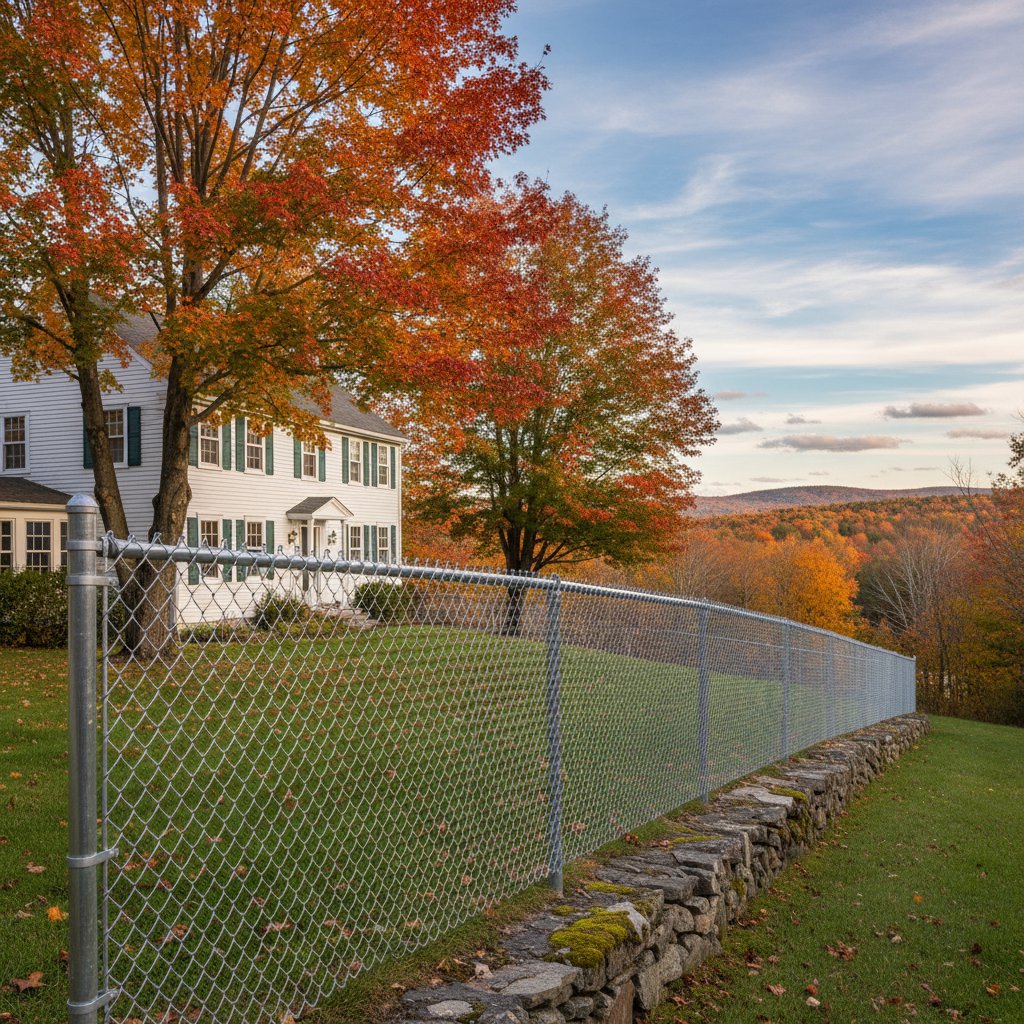
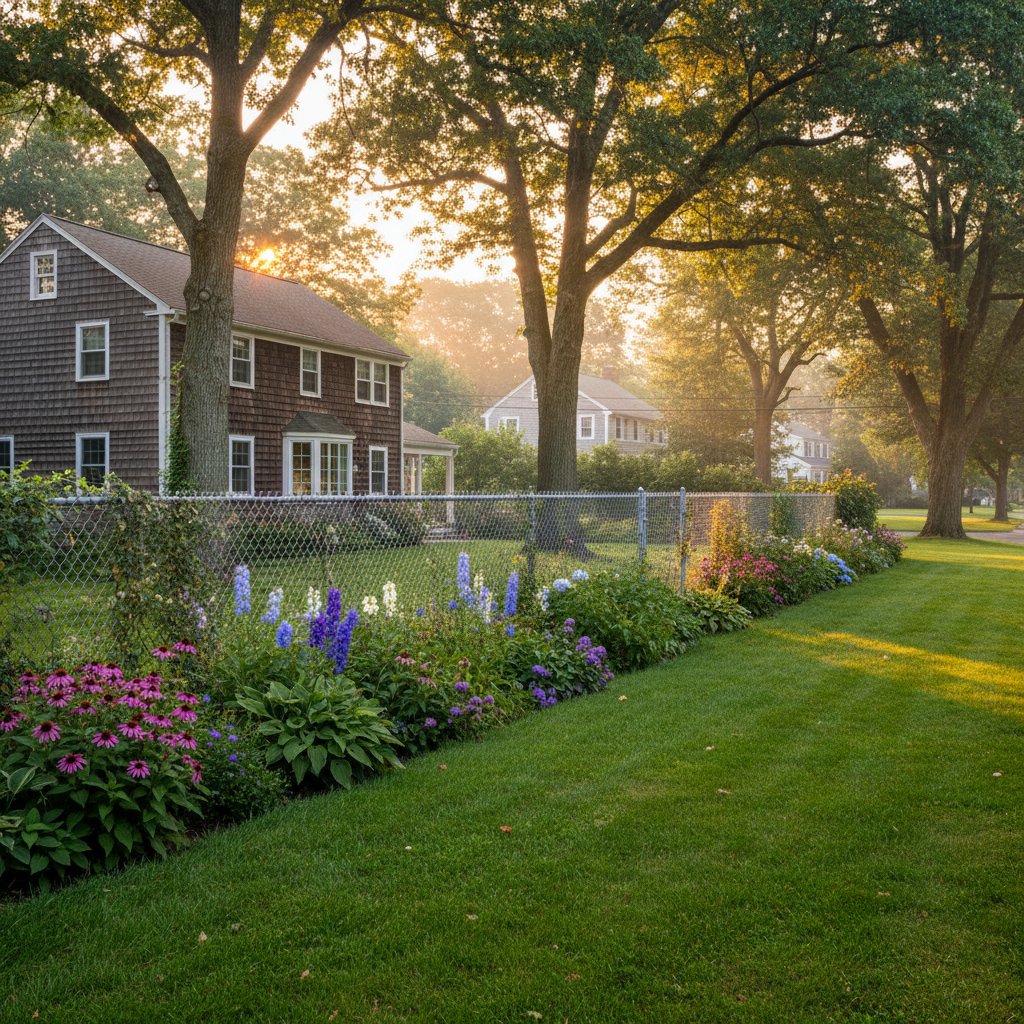
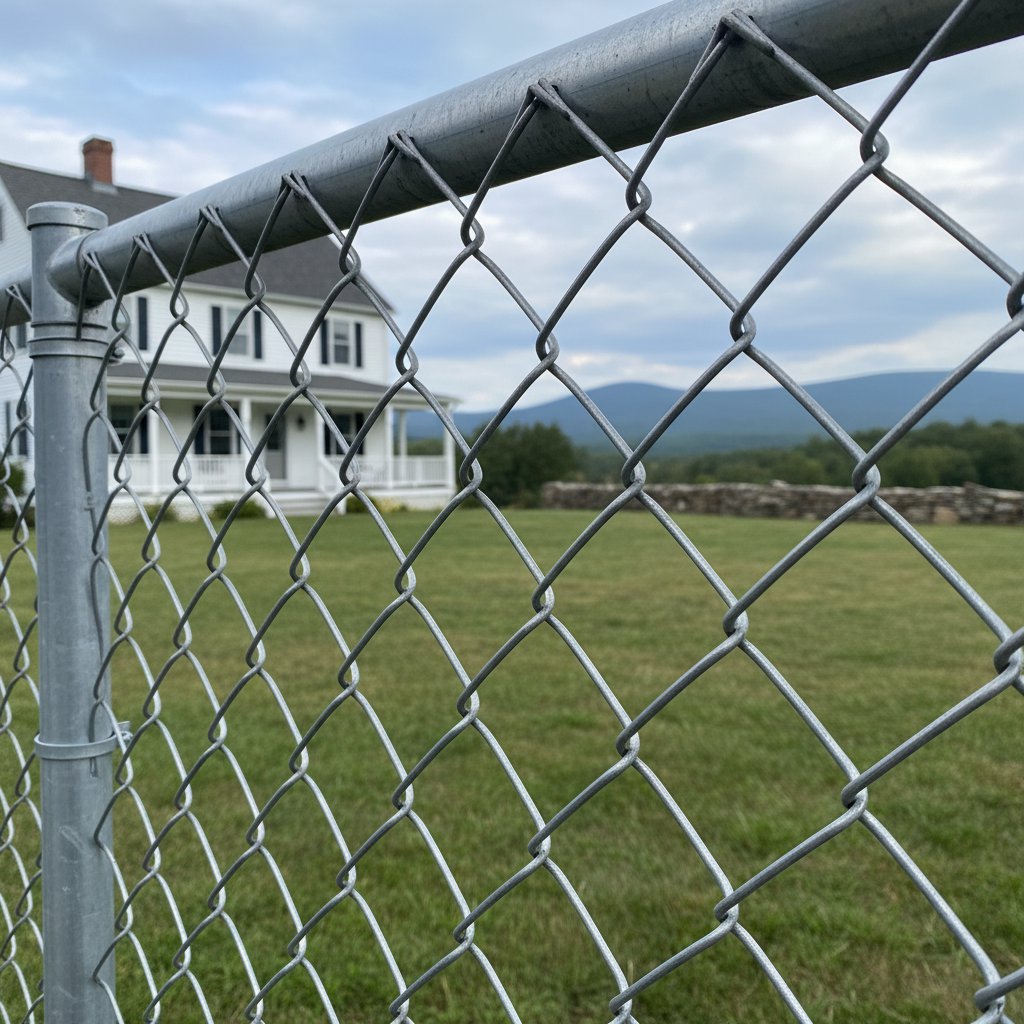
Chain-Link Installations Across Litchfield County
Signs Your Chain-Link Fence Needs Repair or Replacement
Chain-link fails in predictable ways in Connecticut. Watch for these signs.
Wavy Top Rail
A top rail that bows up and down in waves is a sign of frost-heaved posts. The rail can't stay straight when the line posts holding it have moved out of plumb across freeze-thaw cycles.
Sagging Mesh
Chain-link fabric loses tension over time, especially after years of snow load and storm impact. A mesh that pushes inward when leaned on, or visibly sags between posts, needs to be retightened or replaced.
Rust at Ground Level
Galvanized coatings eventually wear through where snow piles drift against the fabric and where road salt splashes from passing plows. Rust starting at the bottom rail is the early warning before sections start to fail.
Gate Drag and Latch Failure
Gates that drag on the ground, won't latch, or have visibly dropped at the latch side usually have heaved or undersized gate post footings. This is a common winter-aftermath repair across Torrington.
How We Install Chain-Link Fencing
A straightforward process from estimate to completed installation.
Free On-Site Estimate
We visit the property, measure the fence line, identify access and underground utilities, and provide a written estimate with materials, post depth, mesh gauge, and labor itemized.
Permits and Utility Marking
Town permits are pulled where required. CT 811 is called for underground utility marking before any digging starts — required by Connecticut law and good practice regardless.
Post Setting
Terminal, corner, and gate posts go in first, set in concrete sized for the load and depth-rated below frost. Line posts follow, plumbed and aligned. Concrete cures before fabric goes up.
Fabric, Tension, Gates, and Cleanup
Top rail is installed, fabric stretched and tensioned with tension bars and bands, and gates hung level with hardware sized to the load. The site is cleared of materials and debris before we leave.
What Our Clients Say
"Cedar board-on-board around the backyard off East Main Street. Crew worked through a stretch of late October rain without slowing down and set every post in concrete deep enough to clear our frost line. Two winters in and nothing has shifted — gates still latch clean."

Chain-Link Fence Estimates in Torrington — Call Today
Contact Torrington Fence Builders at (860) 606-3757 for a free estimate on residential, commercial, or industrial chain-link installation in Torrington or anywhere across Litchfield County.